Published July 22, 2026 • 16 min read • by Sofia Marin
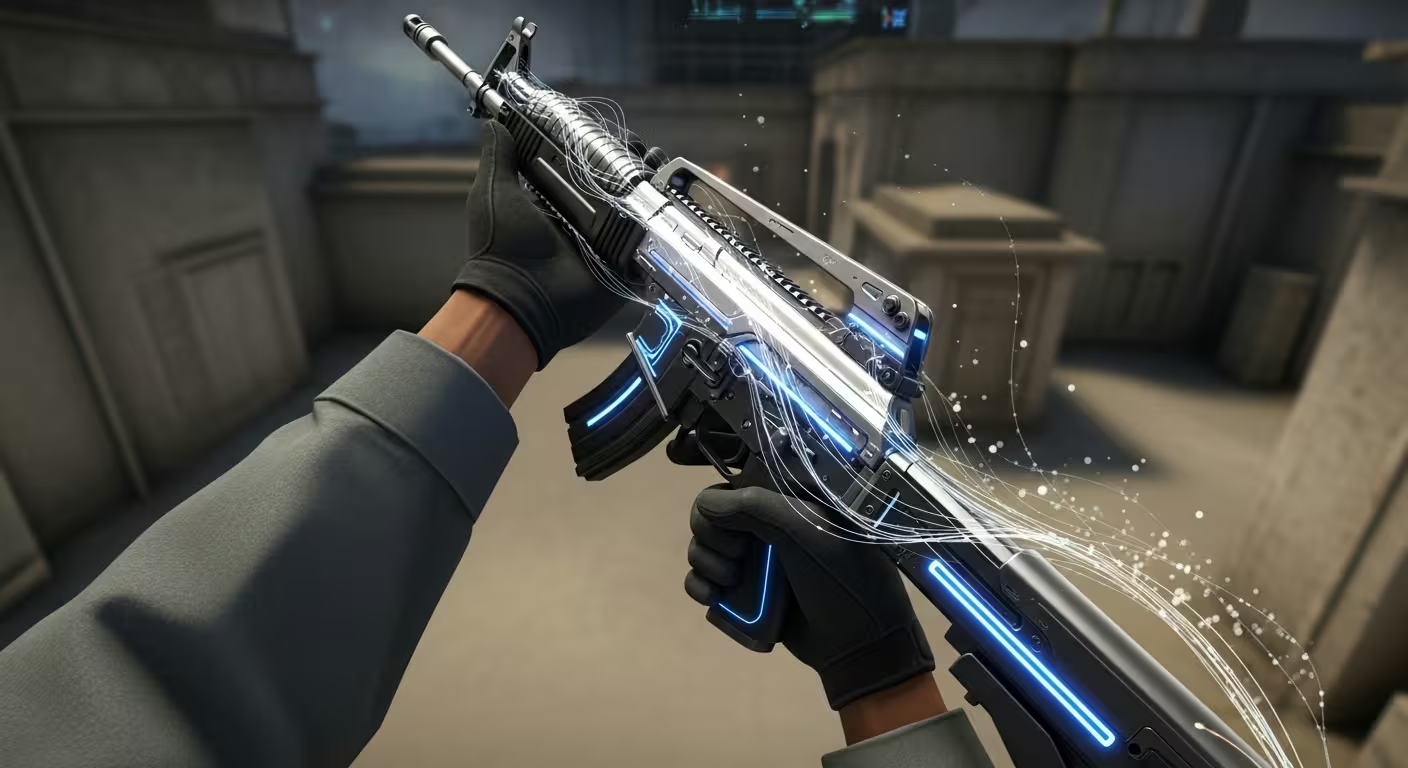
Excerpt: Two identical skins sit side by side. Same float. Same stickers. Same pattern. One sells for three times the price of the other. The difference is not the pixels. The difference is the story. In 2026 provenance – the documented ownership history of a skin – has become one of the strongest forces in the high-end market. SkinsLuck explores why history itself is turning into value.
For years the CS2 market focused almost exclusively on float, pattern and stickers. Those factors still matter. But something quieter and more powerful has grown underneath them. Collectors have begun to care deeply about where a skin has been. Who owned it. How long it stayed in a single inventory. Whether it appeared in public showcases or tournament streams. That accumulated story is now called provenance – and in 2026 it is creating a new class of elite skins.
Imagine holding a knife that has never left the inventory of a respected collector for eight years. Or a rifle that once belonged to a professional player and still carries the quiet proof of that time. These details do not change how the skin looks in game. They change how people feel when they look at it. And feeling, in the end, is what drives the highest prices.
Why Provenance Suddenly Matters More Than Ever
The market has matured. There are now enough high-float and high-sticker pieces that pure visual rarity is no longer enough for the top collectors — a shift we first flagged in our look at the recent sticker supply explosion. They want something that cannot be manufactured – a genuine continuous history. When two skins look the same, the one with a clean, documented, respectable ownership chain consistently commands a premium. Sometimes that premium is modest. Sometimes it is extraordinary.
What Kind of History Actually Adds Value
| Type of Provenance | Typical Premium | Difficulty to Fake | Collector Appeal |
|---|---|---|---|
| Long continuous single ownership | 15–40% | High | Very Strong |
| Known professional player history | 30–120% | Medium-High | Extremely Strong |
| Early inventory presence (pre-2018) | 20–60% | High | Strong |
| Public showcase or content creator history | 10–35% | Medium | Moderate to Strong |
Not every history creates value. A skin that has been traded fifty times through anonymous accounts rarely gains anything. A skin that stayed quietly in one careful inventory for many years often does. Authenticity of the record is everything — it is the same reason certain once-hyped items are now quietly losing their emotional pull while items with a clean story keep climbing.
“I paid almost double for a knife purely because I could verify it had lived in the same inventory since 2017. That feeling of continuity was worth more to me than a slightly better float.” – Elena R., private collector and long-time community member
How Serious Collectors Are Using Provenance in 2026
Advanced collectors now keep careful archives. Screenshots, trade offer histories, public inventory links and community confirmations are treated as part of the asset itself. Some even maintain private provenance files the way art collectors maintain certificates of authenticity. This practice is still early, but the financial results are already visible at the high end of the market — it is the same disciplined record-keeping we relied on in our how knife flipping margins really work.
For broader context on the evolution of the Counter-Strike economy and community practices, many collectors also follow discussions on the official Steam Community Market and related Valve communications.
Five Essential Questions About Provenance
What does provenance mean in CS2?
Provenance refers to the documented ownership history of a skin – previous owners, notable inventories, tournament use or long-term holding records that add story and credibility.
Does every skin with history receive a premium?
No. Only histories that feel meaningful to collectors – famous previous owners, early inventory presence, or continuous high-profile holding – consistently create measurable premiums.
How can I verify ownership history?
Through consistent screenshot archives, trade history records, public inventory links and community verification from long-time collectors.
Is provenance more important than float in 2026?
In certain high-end segments yes. For many elite pieces the story attached to the skin now outweighs small float differences, the same fine margins we broke down in our float lottery deep dive.
Should I start documenting my own inventory?
Yes. Clear records of long-term ownership already increase the future sale potential of strong pieces.
The skins that will matter most in the years ahead will not only look rare. They will feel rare because their history cannot be copied. Provenance is turning ordinary high-end items into something closer to artifacts. If you care about building lasting value rather than chasing temporary hype, this is the shift you need to understand. Begin by examining the stories already sitting inside your own inventory, then return to SkinsLuck homepage whenever you are ready to move with clearer purpose.